Showing posts with label writing advice. Show all posts

Monday, November 19, 2012

NaNoWriMo and Me!


NaNoWriMo and me. Sounds ominous, like a showdown at the OK Corral. In a way, it is. NaNoWriMo can trigger a deluge of creativity, or show you just how much time you can waste fiddling about, waiting for a good idea to emerge.


I am a NaNoWriMo novice. I found out about it two years ago, but was too nervous to enter. I thought everyone knew what it was, until so many of my online and writer friends kept asking me why I was now secluded in a mysterious project with a funny name.

To quote the website: “National Novel Writing Month is a fun, seat-of-your-pants approach to novel writing. Participants begin writing on November 1. The goal is to write a 50,000-word (approximately 175-page) novel by 11:59:59 PM on November 30.”

Sounds easy? Wait, there’s more!

More from the website: “The very first NaNoWriMo took place in July, 1999, in the San Francisco Bay Area. That first year there were 21 of us, and our July noveling binge had little to do with any ambitions we might have harbored on the literary front. Nor did it reflect any hopes we had about tapping more fully into our creative selves. No, we wanted to write novels for the same dumb reasons twentysomethings start bands. Because we wanted to make noise. Because we didn’t have anything better to do. And because we thought that, as novelists, we would have an easier time getting dates than we did as non-novelists.”

Novel idea (no pun intended).

By 2012, they had a huge(ish) organisation, zillions of participants worldwide, an office and a website, and masses of publicity. Not bad for a fun gig!

The rules are simple:

• Write a 50,000-word (or longer!) novel, between November 1 and November 30.

• Start from scratch. None of your own previously written prose can be included in your NaNoWriMo draft (though outlines, character sketches, and research are all fine, as are citations from other people’s works).

• Write a novel. We define a novel as a lengthy work of fiction. If you consider the book you’re writing a novel, we consider it a novel too!

• Be the sole author of your novel. Apart from those citations mentioned two bullet-points up.

• Write more than one word repeated 50,000 times.

• Upload your novel for word-count validation to our site between November 25 and November 30.

Helpful tips include:


Eat lots of chocolate!
• Begin procrastinating by reading through all the great advice and funny stories in the forums. Post some stories and questions of your own. Get excited. Get nervous. Try to rope someone else into doing this with you. Eat lots of chocolate and stockpile noveling rewards.

• On November 1, begin writing your novel. Your goal is to write a 50,000-word novel by midnight, local time, on November 30th. You write on your own computer, using whatever software you prefer.

• If you write 50,000 words of fiction by midnight, local time, November 30th, you can upload your novel for official verification, and be added to our hallowed Winner’s Page and receive a handsome winner’s certificate and web badge. We’ll post step-by-step instructions on how to scramble and upload your novel starting in mid-November.

That’s it in a nutshell. So, how am I doing four days over the halfway mark? I have written a grand total of 31 949 words! I have no idea how to capture a screen image, but here it is in figures. The amazing little calendar on the side of your NaNoWriMometer works everything out for you (no more calculators) and at the end of each day’s writing, just log it into the cute convenient boxes.

Your Average Per Day: 1,681

Words Written Today: 0

Target Word Count: 50,000

Target Average Words Per Day: 1,667

Total Words Written: 31,949

Words Remaining: 18,051

Current Day: 19

Days Remaining: 12

At This Rate You Will Finish On: November 29, 2012

Words Per Day To Finish On Time: 1,505

So, I am ahead, just a little bit. I did not do any writing today (see note further down about malevolent fates) so I HAVE to catch up tomorrow to get back onto schedule. I have never written like this before! No more dabbling around tweaking here and there. One is expected to forge on, relentlessly like a juggernaut to complete the final words—THE END— on 30 November.

The organisers give you loads of gadgets, badges, goodies, and help. They also give you regular pep talks, too. Along the lines of:

1) It’s okay to not know what you’re doing. Really. You’ve read a lot of novels, so you’re completely up to the challenge of writing one. If you feel more comfortable outlining your story ahead of time, do it! But it’s also fine to just wing it. Write every day, and a book-worthy story will appear, even if you’re not sure what that story might be right now.

Nervous writers should plan in advance.
2) Do not edit as you go. Editing is for December and beyond. Think of November as an experiment in pure output. Even if it’s hard at first, leave ugly prose and poorly written passages on the page to be cleaned up later. Your inner editor will be very grumpy about this, but your inner editor is a nitpicky jerk who foolishly believes that it is possible to write a brilliant first draft if you write it slowly enough. It isn’t. Every book you’ve ever loved started out as a beautifully flawed first draft. In November, embrace imperfection and see where it takes you.

3) Tell everyone you know that you’re writing a novel in November. This will pay big dividends in Week Two, when the only thing keeping you from quitting is the fear of looking pathetic in front of all the people who’ve had to hear about your novel for the past month. Seriously. Email them now about your awesome new book. The looming specter of personal humiliation is a very reliable muse.

3.5) There will be times you’ll want to quit during November. This is okay. Everyone who wins NaNoWriMo wanted to quit at some point in November. Stick it out. See it through. Week Two can be hard. Week Three is much better. Week Four will make you want to yodel.

And we’re talking the good kind of yodeling here.

Pep talkers include Neil Gaiman (Coraline), Meg Cabot (Princess Diaries), Sue Grafton (Alphabet murder series), Erin Morgenstern (The Night Circus), Audrey Niffenegger (The Time Traveler’s Wife), Philip Pullman (His Dark Materials), Lemoney Snickett (A Series of Unfortunate Events), and loads of other awfully clever and famous people.

Audrey says: “National Novel Writing Month was a chance to jolt your story onto the page, to use the magic of a deadline to whap out your novel. Now that it is December, I hope you will kick back, have a cup of coffee, reread your 50,000 words, ponder a bit, and then… go for a walk. And on that walk I hope your novel will unclench itself in your brain and let you begin the long, slow, delightful work of rewriting it.”

I started with a great, big, whopping over 4000 words on day one. Wow, I thought, I’ll be finished by next week. Alas, it doesn’t work like that. Somewhere along the line, all sorts of malevolent fates conspire against you, the writer. All sorts of domestic problems or necessities, like shopping, (What happened to the food I bought last week? You ate it?? Why????) just intervene in a most annoying way. In the past, I would have carried on, and not sought to make up the word count I had missed. Aha! Suddenly I had to catch up what I had neglected.

No mistake about it—NaNoWriMo makes you work. I’m loving it!

Thursday, October 4, 2012

5 Easy Steps to Better Writing

John Yeoman has a novel approach to writing—he suggests a lazy 5-step program to improving your writing. Lazy? LAZY???? Does the word even feature in any dedicated writer’s vocabulary? Aren’t writers supposed to slog all hours that God gives in order to squeeze out some creative scribblings that may or may not be the next Amazon bestseller? I must admit, I feel guilty if I miss a day of writing. I read the phrase “It’s like having permanent homework” somewhere and it’s true. However, John has some very good advice in his article, which I have reproduced here with his kind permission.


A Lazy 5 Step Program to Make Your Stories Glow
Yes, and a thousand writing mavens on the web will hustle to reveal it to you. Truth is, there’s only one formula that succeeds, time and again. And here it is... the 5-step program that most top authors use, although they’ll rarely spell it out for you.

#1. Don’t be afraid to write dross: We’ve all heard that we must write every day, and it’s true. But what shall we write? Perhaps we’re developing a story or novel. We know where it should be going, but we’re stuck for words. Solution? Write garbage. And write it fast.

Drop in the first phrases that come into your head. Your object is not to write great literature—just to get that wretched episode finished! There’s no point in playing word games. Not just yet. Probably you’ll junk that whole episode anyway at the final ‘cut’.

Amazingly, the garbage approach works. We have no problems going back to a page of rubbish and, with an amused sigh, editing it into something sensible. Writer’s block? Forget it. There’s no anxiety in this approach so our mind stays calm. We can hack out 1500+ words a day, without pain. Make it your goal to draft total nonsense for an hour. How can you fail? You can then have fun improving it later.

#2. Study television dramas: Now you have a great excuse for watching television. Study how the actors in sitcoms and soaps behave. Every five minutes, somebody will insult, distress or romance somebody else. Watch their faces, lips, and body movements. Also hear how their voices change. Jot it all down. True, the actors overact. But you could use that body language, toned down, in your stories.
Also take careful note of every ‘scene hanger’, the way an episode closes. Maybe it’s an unresolved question or note of alarm. That uncertainty will tease us into the next scene, even across a commercial interlude. Adapt those scene hangers and you’ll soon have a wealth of ways to link the episodes in your own stories, so the reader stays hooked.

#3. Act as a walking tape recorder: Christopher Isherwood inspired the phrase ‘I am a camera’. It described his work. He had reproduced, without judgement or interpretation, what he actually saw and heard in post-war Berlin. You can do that in conversations that you overhear. Take a discreet note of every colourful turn of phrase. Folk say the most amazing things that you would never be able to invent for yourself.

Okay, we know that ‘real’ people do not speak the way they do in books. But you may be amazed at how often people fail to complete a sentence, or reply to a question, or even speak coherently at all. Almost all communication is done ‘between the lines’. If you get that sub-text into your stories, your characters will seem ‘real’.

#4. Find something boring to observe: Boring? Yes. Here’s a wonderful way to make a walk productive. Stop at random, wherever nobody can see you. And just look. Are you staring at a shop window? A poster? A car-filled motorway or a placid park? And is the scene boring? That’s wonderful! Why? Imagine what a child would make of that scene, if they had never seen it before but possessed an uncanny gift with words. A bare brick wall becomes a magic landscape. A mundane street is an adventure to be explored...

Write a description of that scene, using all the five senses—as if you had never seen anything like it before. And pack all that sensual detail into one sentence. Now is not the time to be lazy. Use words that precisely convey the uniqueness of that moment. In effect, write a haiku.

True, this is a tough exercise. How can we describe, say, a graffiti-covered wall in words that make it fascinating? But it’s the key skill of a great writer. Master it and you’ll be able to ‘switch on’ this habit of perception instinctively.

I once had lunch with a popular UK author. ‘Look over there,’ she said. ‘Who?’ ‘The man with a face like a pork pie.’ She was describing her publisher, who had just entered the restaurant. I wager that phrase found its way into her next novel (if not her conversation with him). Point is, she couldn’t stop herself using colourful phrases, even in casual observations!

#5. Acknowledge that your story will never be perfect: Can you write a perfect story? Of course, not. Nobody can. Even Shakespeare’s plays have lines that make no sense at all, even to scholars. (Perhaps he was drunk...) Point is, you have to re-write a story at least a dozen times before it’s fit to present to anybody, let alone a publisher.

One painless way to do this is: get your story as good as it’s ever going to get (you think). Then drop it into a closet for a month. Drag it out and try not to laugh at how bad it has become, all by itself. That wonderful paragraph you spent hours on? Dross. And why do your characters drone on, and on...

The ideal time to re-write a story is when it has spent a year in limbo. Of course, you can’t afford to leave a story on the shelf if you write for a living. Professional authors have to make do with getting their work 80% perfect and letting their agent and copy editor tidy up the rest. Still, everything they submit will have gone through the ‘closet’ process a good many times.

Yes, there is a sure-fire formula for writing stories that succeed. It’s the one above and it has been around since stories began. Of course, no formula will work unless you have some writing talent. If you have, it’s just a matter of developing good habits, like those above. It's how every pro author started...

John's free book How to Win Story Contests for Profit and free 14-part course in story writing for the commercial market can be found at:

I selected this post to be featured on Book Blogs. Please visit the site and vote for my blog!

Wednesday, July 4, 2012

The Magic of White Space

Have you ever wondered why some books are such a mission to read, and others ...well, you literally fly through the story, swept along by a great plot and gripping elements. The answer is quite simple and who better to explain why than Randy Ingermanson, who offers loads of simple writing advice.

Creating White Space Magic

One of the most common mistakes I see when I critique manuscripts is that the paragraphs are too long. When I see a dense page of text that has only three or four paragraphs, I suspect the pace is going to be slow and the writing is going to be boring. When I see a page with a lot of white space, I suspect the pace is going to be fast and the writing is going to have a lot of conflict.

Part of this is just a psychological illusion.

When someone is reading a scene with a lot of white space, their eyes zip rapidly down the page.

Before they know it, they're  flipping the page, and then the next, and the next.

White space makes your reader feel like they're flying.

As I said, this is a psychological trick, and by itself it doesn't mean very much. Pace is about more than reading pages rapidly. Pace is about the amount of conflict coming at the reader on each page.

Fiction thrives on conflict.

Don't confuse conflict with mere physical action. Conflict is about trading punches, but most often those punches are verbal or psychological, not physical.

Conflict is a lawyer cross-examining a lying witness. Conflict is a woman trying to get her man to tell her what he's really feeling. Conflict is a baseball player stepping up to the plate with the tying run on third and facing the league's toughest pitcher in the final inning of the World Series.

Conflict is about back-and-forth.

You get the least conflict per page when you use a lot of description, narrative summary, and exposition. All of these tend to use long paragraphs that focus on a single thing.

You get the most conflict per page when you have a lot of action and dialogue and when you alternate rapidly between characters. Doing that will naturally give you a lot of short, punchy paragraphs.

The more paragraphs you have, the more white space on the page.

This isn't complicated, so I'm not going to belabor it. White space is magic, not because it CAUSES good writing but because it's an EFFECT of good writing.

If you've got a scene that your critiques are telling you is slow and boring, take a look at how much white space you've got. You probably need more.

Look for every paragraph longer than five lines. Can you break it up? It probably has some description or long explanation or something else that you're certain your reader can't live without. Kill it. Get rid of it. Be a brute.

Here is where you protest that you can't do that—your reader will hate you forever for cutting out that long horrible explanation about the history of mildew. Fine, if it's that important, then cut it down to three lines. But you know in your lying little heart that it's not that important. It may be that the paragraph has no description or explanation at all. In fact, you may believe it's packed with action. The tiger and the vampire are locked in a wrestling match to the death. But if that paragraph is longer than five lines, you're probably using narrative summary. You're telling your reader about the fight, rather than showing the fight.

If a fight is worth having in your story, it's worth showing, punch by punch, snarl by snarl, bite by bite. Break up that long paragraph into a sequence of actions and reactions. One paragraph for the vampire, one for the tiger, back and forth, until you have a victor. When you do that, you'll naturally produce a lot of white space. Your eyes will tell you when you've done enough.

It's possible to go too far, of course. You don't want to have an entire novel of one-line paragraphs. White space is wonderful, but there can be too much of a good thing. I've seen two writers who used too much white space. Oddly enough, both of them are best-selling authors. I've never seen a bad writer use too much white space.

If too much white space is your problem, there's an easy fix for it. Just add in some interior monologue, some sensory description, and even an occasional bit of exposition to fatten up a few paragraphs.

White space is magic. White space is power. You know the drill. Great power, great responsibility.

Use it well.

This article is reprinted by permission of the author. Award-winning novelist Randy Ingermanson, "the Snowflake Guy," publishes the free monthly Advanced Fiction Writing E-zine, with more than 31,000 readers. If you want to learn the craft and marketing of fiction, AND make your writing more valuable to editors, AND have FUN doing it, visit his site. Download your free Special Report on Tiger Marketing and get a free 5-Day Course in How To Publish a Novel.

Friday, June 29, 2012

What Writers Can Learn From Snow White and the Huntsman


Visually compelling but short on lots of story elements.
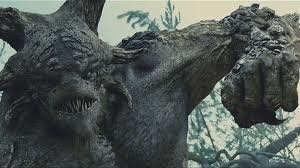
 I’ve just watched Snow White and the Huntsman and I emerged from the cocoon of the movie theatre a mite confused. Was it an action movie? A love story that didn’t get off the ground? Why were the characters so confused? Why did no one have any real motivation except the Huntsman and his was simple: money. Why did minor elements such as the amazing Troll and the wonderfully cantankerous Dwarves steal the show?


My YA daughter, a stalwart Kristen Stewart fan (thanks to Twilight) countered my every criticism with, “Oh, it’s not that bad.” Then I realised how much was just not that good, and how a movie’s failings (visual book thing again) can translate to the page for authors. So, what can we learn from Snow White and the Huntsman?

I read a few reviews to help me understand why I did not enjoy this visual feast, for a visual feast it is. From the red blood, to the white snow, to the raven black elements, to the knights in silvery shining armour racing along the beach with swords drawn, all the beauty is there … but it cannot sustain what is essentially a great story told poorly.


Great action sequences!
 Synopsis: Snow White is the princess of Tabor. After his wife's death, King Magnus marries the beautiful Ravenna after rescuing her from the Dark Army, an invading force of glass soldiers. Ravenna—who is in fact a powerful sorceress and the Dark Army's master—kills Magnus on their wedding night. As Ravenna seizes control of the kingdom, Duke Hammond escapes the Castle with his son William, but is unable to save Snow White. Snow White is then locked away in a tower of the castle.


Real scene stealers!
 The kingdom declines under Ravenna's rule as she periodically drains the youth from young women in order to maintain a spell once cast by her mother, which allows her to keep her beauty. When Snow White comes of age, Ravenna learns from her Magic Mirror that Snow White is destined to destroy her unless Ravenna consumes the young girl's heart, which will make her immortal. Ravenna orders her brother Finn to bring her Snow White but she escapes into the Dark Forest, where Ravenna has no power. Eric the Huntsman, a drunken widower who has survived the Dark Forest, is brought to Ravenna who orders him to lead Finn in pursuit of Snow White. In exchange, she promises to revive his deceased wife Sarah. Duke Hammond learns that Snow White is alive and has fled into the Dark Forest, and his son William, Snow White's childhood friend, later infiltrates Finn's band as a bowman to find her.

The Huntsman locates Snow White in the Dark Forest but Finn admits that Ravenna cannot resurrect the dead. The Huntsman then helps Snow White to escape, promising to escort her to Duke Hammond's castle in exchange for a reward of gold. They meet the dwarves who just about steal the show, and thereafter it’s on to the Duke’s castle to round up an army to defeat the evil Queen.


Wonderful fairy tale troll!
 Fairy tales are part of the dark mythological underbelly of civilisation, and many lessons and social commentaries exist today in these handed down tales. In like fashion, many books are simply repeats of or expansions upon eternal themes such as the quest/journey/coming of age etc. Anne R. Allen says: Experts don’t agree on the exact number of narrative plots, but there aren’t many. (Good post in case you think someone like James Patterson stole your plot!)


So how can we look at this film and learn some writing lessons?

Let’s check out the reviews. These comments (I've underlined the most telling) can be applied to writing.

Rotten Tomatoes: While it offers an appropriately dark take on the fairy tale that inspired it, Snow White and the Huntsman is undone by uneven acting, problematic pacing, and a confused script.

The Washington Post: Michael O’Sullivan says: Too many bad apples spoil a tale. Overlong, overcrowded, overstimulating and with an over-the-top performance by Charlize Theron as the evil queen Ravenna, the movie is a virtual orchard of toxic excess, starting with the unnecessarily sprawling cast of characters. Snow White and the Huntsman feels less like a movie than a deadly cocktail of movie clichés, all of which have been thrown into a blender, set to ‘slow’ and pureed for two hours.

The San Francisco Chronicle: “…which takes everything mythic about ‘Snow White’ and pounds it out until it's flat and dead. It takes something whose truth is elusive and turns it into a movie that's obvious and trivial. The fairy tale … suffers from a problem in its rhythm. It's not that its pace is too slow, but that it's too regular, and this lack of syncopation makes it feel slow.

Ouch!

A Writer’s Digest article advises: Analyze successful stories. They (writers) ask questions when reading and use their findings to help strengthen their work. For example:

• How does the writer make me want to turn the page?
• Why am I drawn to the lead character?
• When are the stakes raised?
• How does the writer integrate minor characters?
• What makes a scene work?
• What’s the key to conflict?
• How does the writer handle dialogue?

In my humble opinion, the problem with Snow White is that loads of bad stuff eclipsed loads of good stuff. A cleaner, simpler story, tighter pacing, consistent characterization, believable motivation, a good sub-text and backstory, and quicker links to the actually great action scenes would have transformed this film into a iconic version of a tried and tested tale of good triumphing over evil. People don’t get tired of a good story told well.

How well are you telling your story?