Showing posts with label parenting. Show all posts

Monday, October 24, 2016

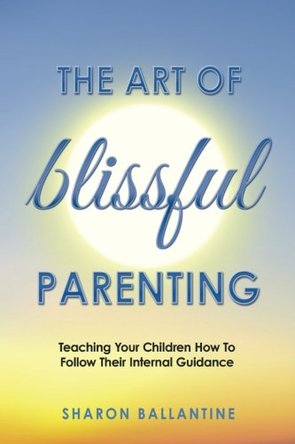
Book Blast: The Art of Blissful Parenting


BeachBoundBooks is pleased to be coordinating a Book Blast for The Art of Blissful Parenting by Sharon Ballantine. The blast will run October 24 - October 26, 2016.

collages14


About the Book

artofblissfulparenting 

Title: The Art of Blissful Parenting | Author: Sharon Ballantine | Genre: Parenting Number of Pages: 190 | Publisher: Balboa Press | Publication Date: November 24, 2015

Book Description: What if you had the ideal relationship with your children? This book is for every parent that wants to have a powerful bond with their kids. Parents have the opportunity for newfound freedom and joy when they teach their children about their Internal Guidance System. Tools and guidance are offered in this book for exacting the art of blissful parenting by practicing alignment. It's fun and easy to work with the Universe and a short lesson in the Law of Attraction is part of this script. Parents-live and also teach your children how to manifest what they want by thinking in a more positive way and deliberately creating their lives.


What others are saying...

"This book is filled with amazing tools for any adult who wants to sharpen the innate gifts of the children in their lives and support them in developing and following their internal guidance. Beautifully and thoughtfully written with clear practical exercises to allow you to put into practice what you have read." - Debbie (Amazon Reviewer)

"The Art of Blissful Parenting offers readers a refreshing, out-of-the-box approach to raising happy children. Sharon offers practical tools and tips for teaching kids how to thrive by using the law of attraction and following their internal guidance system." - (Amazon Reviewer)

"This is a fascinating book for anyone who wants to raise confident, independent children. The author presents her unique ideas in a thoughtful and insightful way" - Cheryl (Amazon Reviewer)

About the Author: Sharon Ballantine

1475380012 

Sharon Ballantine is a Parenting Coach and certified Law of Attraction Life Coach. She has successfully raised three children and is the author a new book "The Art of Blissful Parenting."

Sharon is the founder of "The Ballantine Parenting Institute," her online parenting program.

Ballantine is a sought after speaker, and was host to her own Internet TV Show with Conscious Evolution Media Network from 2013-2014. The platform of The Sharon Ballantine TV Show featured a conversation with passionate spiritually minded guests. Sharon also had her own column with Beliefnet.com "Parenting on Purpose."

Sharon was interviewed on TV, February 15, 2016 for her new book release, "The Art of Blissful Parenting" on KING 5 New Day Northwest, a live daytime talk show in Seattle. Ballantine has been interviewed on several radio shows including Blog Talk Radio in Los Angeles, Chat with Women radio show in Seattle and Conscious Evolution Media Internet TV in Denver. Her interview with Hay House Radio will air by summer '16.

Sharon's website is SharonBallantine.com which features weekly teaching blogs, podcasts and slideshows. You can see her educational videos on her YouTube channel, Sharon Ballantine.

Sharon lives in the Pacific Northwest with her husband Jay.


Book Blast Giveaway

Prize: One winner will receive a $25 Amazon gift card or $25 PayPal cash prize, winner's choice. Giveaway ends: November 7, 11:59 pm, 2016
Open to: Internationally.
How to enter: Please enter using the Rafflecopter widget below.
Terms and Conditions: NO PURCHASE NECESSARY TO ENTER OR WIN. VOID WHERE PROHIBITED BY LAW. A winner will be randomly drawn through the Rafflecopter widget and will be contacted by email within 48 hours after the giveaway ends. The winner will then have 72 hours to respond. If the winner does not respond within 72 hours, a new draw will take place for a new winner. Odds of winning will vary depending on the number of eligible entries received. This contest is in no way sponsored, endorsed or administered by, or associated with Facebook. This giveaway is sponsored by the author, Sharon Ballantine and is hosted and managed by Stacie from BeachBoundBooks. If you have any additional questions feel free to send an email to stacie@BeachBoundBooks.com.

a Rafflecopter giveaway

Wednesday, June 12, 2013

Piggy on Wheels Teaches Kids Compassion


When I read the headlines on Galleycat that a piggy in a wheelchair had inked a 3-book deal with self-help publisher Hay House, I was instantly intrigued. Wouldn’t you be too?
His press release says: Chris P. Bacon, the pig in a wheelchair who quickly became a YouTube sensation in early 2013 with over 1.2 million views, is setting out to teach children about compassion, acceptance, and loving your imperfections. Chris P. Bacon was rescued by his veterinarian Dr. Len Lucero after a young woman reluctantly dropped him off to be euthanized because of a congenital defect that affects his rear legs. Dr. Lucero gave Chris a second chance at life and with two wheels strapped to the rear of his body, he is now a perfectly healthy and happy piggy-on-the-go.


Chris P. with training wheels
This little piggy was born with deformed hind legs, which means he lifts himself up on his front legs. While he is little, this modus operandi will work, but not later when he grows to full weight. His new owner modified his son’s toys to give Chris P. his first set of wheels. As the piggy grows heavier, he’ll graduate to bigger and better wheels. For many animals, life would be over, but for Chris P., life and a new role has just begun. His YouTube videos and his television appearances show him to be a curious, affectionate, independent and very intelligent piglet, with loads of personality and a secret obsession with grapes.

Chris P. says on his Facebook page: My name is Chris P. Bacon. I am a pig in a wheelchair. My veterinarian Dr. Len Lucero decided that I needed to be given a second chance. I went home with Dr. Lucero that day, so that I would have a chance at life as a handicapped pig. I live in Florida and love my new life! Watch me grow and take on new obstacles that life has to offer me. Thanks for sharing it with me!


Chris P. with owner Len Lucero
Owner Len Lucero finds that the pig is garnering fans by the barrow loads, and with his own website, Facebook page, Pinterest and Twitter account, it’s not hard for Chris P. to spread the message: it’s okay to be disabled. Chris P. and Len have a new task in life: putting smiles back onto disabled/handicapped kids’ faces. Chris P. and Len Lucero will be travelling to various centres to help kids. Chris P. will spread the message of love just by being himself!
Teaching kids compassion is a wonderful start in life. From this beginning, kids learn the best qualities that make them better human beings. Kids will learn about perseverance, overcoming obstacles, and tolerance towards others.


"Vroooooom!"
Hay House, the world’s largest self-help and motivational publisher has signed a three-book deal with Chris P. Bacon, his dad Dr. Lucero and co-author Kristina Tracy, who has worked on children’s books with Wayne W. Dyer, Dr. Christiane Northrup, Deepak Chopra and more. The first book, geared towards children ages 4-10, will launch in Fall 2013.

Help Chris P. spread the word by visiting his social media sites and following his trail of good deeds. Please share his antics and share the message.

by Fiona Ingram

Thursday, August 18, 2011

Five Top Tips to Make Reading Rock!


With the plethora of gadgets and technology at their fingertips, getting kids to open a book seems a daunting task for many parents. However, as any parent knows, when kids are interested in something, it’s hard to tear them away from it! You can turn your kids into avid readers by making reading exciting and interactive. Creative and interesting approaches to reading will transform this activity into something novel and stimulating. These tips will also enhance your child’s reading experience, encouraging them to think more deeply about the characters and themes in books, while having a whole lot of fun! My guest post today comes from Susan Black, who is a freelance writer and mother of two pre-teens.


FIVE TOP TIPS TO MAKE READING ROCK!
As pleasurable as reading is there are many ways to engage with a book other than simply reading it. Active reading strategies help young readers formulate their own ideas about characters, events and themes in literature. Outlined below are 5 active reading strategies to try with younger readers.

Strategy One: The Treasure Box

Whilst reading a book ask the young reader to choose a character and fill a shoe box with small items that would be important their chosen character. For example, if you were reading the Twilight series and the reader chose Bella they might fill the box with an old keepsake from her mother, a ring or flower given to her by Edward and a photo of her and her father. The idea is that the reader updates the treasure box as the story progresses. It’s almost like physically emptying the pockets of a character to find out what is important to them personally. This gives readers a deeper understanding of the characters at hand and enables them to engage with characters at a deeper emotional level.

Strategy Two: Reader Turned Reporter

Reading is a great tool for writing and a great activity is to get young readers to act as newspaper reporters throughout the story. This could range from getting them to read out a TV style news item to writing a column for the local newspaper based on events from the book. Most books involve dramatic events that would easily be covered by local, and sometimes even national, news channels and encouraging them to report on events from the book might help them look at the book from a new perspective. For example was the wolf in Little Red Riding Hood really the villain? The media’s penchant for twisting facts can make for an interesting perspective on new books.

Strategy Three: Hot-seating

Have young readers step into the shoes of a character and get them to respond to a series of questions. As all of the answers about a character are not always given in the book the reader will have to think imaginatively about their responses and make up believable answers. This works particularly well for stories involving passionate crimes as it can be set up in a court of law situation with the reader having to justify the actions of the character. If this is a little bit advanced for a child the adult may instead step into the shoes of the character and allow the young reader to question them. Formulating questions for a character is a higher level thinking skill as the reader is probing the material and creating a personal line of enquiry.

Strategy Four: Thematic Collages

Young readers who respond well to art projects will enjoy creating collages around the major themes in a book. Looking at the finished collage anybody should be able to tell you what a particular book is about. For example, in the case of Romeo and Juliet there may be images concerned with death, love and violence. This would give anybody coming to the play for the first time an idea of what to expect if they read it, or indeed, watched it. This works well for young readers as it gives them a visual representation of all the major aspects of the text. With complicated texts this can help to break down more sophisticated concepts into simpler terms.

Strategy Five: Create Your Own Ending

When you reach the last chapter of the book it’s always a good idea to stop and digest everything that’s happened. An even better thing to do is to make predictions about how the book could end and to write an alternative ending. The fun of this activity is that it can be easily made as serious or as fun as you want it to be. For fun you might try and get a young reader to write the most unlikely ending to the story. If you’re wanting the reader to take the text more seriously however you might get them to make sensitive predictions about how the book will end and write their own version. Not only is this enhancing their ability to analyse books it is giving them the opportunity to improve their creative writing skills. At the end of it they will have produced a piece of work they are proud of and will probably enjoy reading the end of the book even more to look at the similarities and differences between their written ending and that of the author.

Susan’s other interests lie in photography and amateur interior design. She has written this article on reading with kids on behalf of her favourite recliner sectionals specialists.

Tuesday, June 14, 2011

Can Books Help Kids Cope with Life?

Can books help kids cope with life? Recently I thought about this because of a slew of articles that have appeared in the press and online, some denouncing the levels of violence and sexuality in YA novels, and others arguing that by reading about YA problems today's teens are able to deal with them.

This article appeared in the Guardian (UK) Writing in the Wall Street Journal, columnist Meghan Cox Gurdon argued that contemporary fiction for teens is now "so dark that kidnapping and pederasty and incest and brutal beatings are now just part of the run of things in novels directed, broadly speaking, at children from the ages of 12 to 18".

This is a thought-provoking argument and it unleashed a firestorm of opinion. My own view is that the average teenager is not likely to encounter the dark and sordid side of life described in some of these novels. However, a sheltered teen from a wealthy family whose worst experience is being grounded or having their pocket money stopped is not the same as a young person struggling to survive in a situation of abuse, rape, incest and violence. I think the point is this: are novelists sensationalizing these real aspects of life in order to sell books? Have we, as a society become so hardened that only the most shocking of descriptions and experiences will move us? Will reading about these terrible experiences help the very young people who are undergoing the same sort of tribulation? One thinks immediately that possibly a poverty-stricken teen would not have access to either books or/and education, but I don't wish to split hairs. How can books help kids cope with life?

Life issues are sometimes a challenge for kids to comprehend. Although most parents wish to shield their children from the tragic side of life, many times reality intervenes and the parent may be powerless to adequately comfort their child when dealing with a sad or traumatic situation. Death, disease, divorce, moving house, loss of a pet, bullying, experiences with alcoholic or abusive parents, and drugs form part of a long list of potentially negative life experiences. The death of a beloved grandparent, parent, sibling, friend, or an important adult can have a potentially devastating effect on a young person. Books can offer the kind of therapy that a child will appreciate and in a format that they can understand.

Stories, either fiction or non-fiction, enable children to identify with characters and sad or devastating events and relate these experiences to their own lives. Children are then able to recognize and understand how other people respond to frustration and disappointment. This helps children develop empathy and understanding of human behavior. It can also enable children to respond to discussing issues with a parent or responsible adult such as a teacher or therapist.

Today’s books also have opened up discussions on a variety of previously taboo topics or at least topics that were avoided. These issues can include:

  • bullying at school;

  • negative comments regarding a child’s weight, appearance, or lack of athleticism;

  • tolerance of differences among peers, such as income levels, religious beliefs, nuclear families vs. broken homes, etc.;

  • a parent’s history with substance, emotional, physical, and sexual abuse;

  • long term changes in living situations, such as the arrival of stepchildren or grandparents;

  • issues such as homosexuality and lesbianism, especially where a parent decides to ‘come out’;

  • unique abilities and challenges faced by peers or family members with special needs, i.e., autism or Down Syndrome, debilitating illness, or illness or trauma resulting in disability, etc.

Regardless of the issue tackled or the story composed, a book’s therapeutic effectiveness will be enhanced by:

  • age-appropriate language;

  • honest and realistic characterizations;

  • an avoidance of explicit preaching while allowing the reader to make the moral connection through critical thinking;

  • a good, well-written story with relevant illustrations

Books are essential guidelines between covers and the younger kids start reading, the better they will be equipped to deal with the many curved balls that will be flung at them.


Of course, even the best written book embracing a particular problem is not a cure-all, and parents should take note that books cannot replace the expert advice of a health care professional where necessary. However, using books for the purpose of healing will often be a solid step in helping a child understand and accept the realities of life, even when harsh and unpleasant. 

Friday, June 10, 2011

Improve Your Child's Reading Levels

Lately I've been reading some disturbing stuff about the fate of books and libraries, and the decline of children's reading levels. It is ironic that in England the law says prisons have to have libraries, but libraries are closing in schools and boroughs because of spending cuts. I've also been reading how some children never open a book and as a result their grades suffer. On many occasions the reason is that there are no books to open! Believe it or not, there are homes with not a single book to read. Whatever the reasons for a child not reading, this situation can be reversed. Can parents make a difference and turn a non-reader into an avid reader? The answer is yes!

Parents already know that books are vital to their child’s scholastic achievements, and developing life skills. It can be disappointing when your child expresses absolutely no interest in reading. However, you can change that by coming up with new and interesting ways to ‘package’ the art of reading. Reading is a skill, just like any other skill. It has to be introduced, nurtured, and developed. Imagine trying to play championship tennis when you can barely hit the ball? Children don’t enjoy what they can’t do. And when reading is difficult, they shy away from even coming near a book. Turning your non-reader into a reader will require your participation and encouragement every step of the way.


• A good way to begin is to actually assess your child’s reading level. If it’s below par, then that’s one reason why he or she isn’t keen on books—books are the enemy, boring, a problem. Have your child read a page or two from a variety of books. Make a list of the words they find easy/hard/not understood. Once you have an idea of their level, based on vocabulary skills, then you can move forward. In fact, to build your child’s confidence, perhaps begin with a book for a younger age. Your child will skim through it, feeling proud at having finished and understood it, and you can offer praise by saying, “Look how easily you managed that! Shall we try something else?”

• A book can appear quite a formidable object to a non-reader. Begin small. Start with a thinner book, not some great tome, and say, “I bet we’ll finish this quickly.” Then let your child read the book in bite-sized pieces. Don’t try for ten pages—read only four or five pages. Your child will feel this is not a huge task after all.

• Reading aloud is something that all parents should do, regardless of children’s age. Most children really love that special time when Mom or Dad comes in to say good night. You can say, “Hey! I’ve got something really exciting here. Want to hear some?” Anything to delay turning off the light, your child will say (of course) “Yeah!” You can make this session into something really memorable by acting the parts and using your Repertoire of Funny Voices, but more importantly, stop at a really exciting point, just when the hero is about to be plunged into mortal danger. Close the book and say, “Gosh! I hope he survives. We’ll have to wait until tomorrow to find out.” Generally, no kid can go to sleep without confirming their hero is indeed still alive…

• Praise and admiration boost a child’s confidence. You can do this by letting friends and family members know just how well your child is doing. “It’s amazing how many pages (child’s name) is reading every day now!” Soon your child will be the one to suggest reading. Use the time together to understand your child’s thought processes, and structure the book choices around what really sparks their interest.

• Get your child their own library card and encourage them to begin choosing their own material. Buying book vouchers instead of other kinds of gifts will encourage your child to start building their ‘own’ collection of cherished books.

• Go slowly—tennis champions aren’t made overnight….

Sunday, August 1, 2010

Books That Change Childrens' Lives

When examining books that have changed children’s worlds, many times the books are possibly the parents’ choices. This could be because until the child can go out and choose and pay for their own books, the parent is usually the book buyer, and therefore is by default the book chooser.

Parents may purchase enchanting classics because they want their children to enjoy the books they grew up with. It could also be that some books may be considered inappropriate by the parent. Perhaps the subject matter is too shocking in some cases. For example, when I first read Lord of the Flies (now a classic) at a very tender age, I was shattered. Violence and death among children seemed impossible. Nowadays, the number of instances of child on child violence is rising. Or is it? Possibly with wider media coverage and the age of the Internet, more cases are being reported because the dissemination of information has become so much easier.


When I taught my adopted daughter Mabel to read I naturally turned to my old favorites. I was very pleased to see many of them on Susan Orleans’ list. Many of those books changed my world. Mabel loved lots of them but naturally began to spread her literary wings as she grew up. First it was The Golden Compass, then Inkheart, and then Twilight. It’s time for another trip to the bookstore soon. Twilight has kept her busy for a very long time because each movie release means another read of the whole series to check what the movie makers are leaving out.

Your child may not enjoy the beloved books of yesteryear that were your friends and companions. Times change, technology marches ever onward, and children’s tastes develop. Any parent wishing to foster and develop a love of reading in their child should be aware of the new and often difficult pressures on children today. Issues that did not exist thirty years ago may be of compelling importance now. Subjects that were never spoken of such as child abuse, incest, violence, drug use, death, a dystopian world, global warming, war, racism, nuclear threats, etc unfortunately rear their ugly heads in today’s society. Children are also bombarded with media messages that create confusion. Should kids be growing up too soon parents wonder? Should they be reading this or that?

Some practical tips for parents wishing to expand their children’s book list and foster a love of reading in their child:
  • Sign up for online newsletters from children’s publishers to keep up with latest releases.
  • Subscribe to children’s book review sites such as 5 Minutes For Books to keep abreast of kids’ books. Often reviews are helpful in deciding whether to purchase a book or not.
  • Look at what your child is reading at school and discuss whether they are enjoying it, and if not, why not.
  • Plan a shopping trip to a good bookstore and look at the books most prominently displayed. Chat to the store assistants. Get their opinion on what is popular, what works, and what they would recommend. Find out if any authors will be doing book readings or if there are any book launches coming up.
  • Local librarians are a fount of often unappreciated knowledge. Ask about book readings or library sessions where there is a fun activity planned.
  • Buy books that target your child’s interests and hobbies.
  • Encourage your child to make their own choices.
  • Fill your home with books on a variety of topics. Recent studies show that having a few as twenty books in the home boosts your child's chances of going on to higher study.
  • Let your child see you reading, and how much you enjoy it.
  • Children love to share activities with parents. Reading aloud to kids is something all parents should do for as long as possible.
For more articles on the benefits of books for children, or for educational aspects visit my author site (see media page).

Don’t be afraid that any one book will change your child’s viewpoint in a negative way. Life is full of all sorts of experiences that they must eventually experience. Books are a way for kids to dip into another world or explore topics safely.

Friday, July 23, 2010

Enid Blyton lingo gets an update | theBookseller.com

Enid Blyton lingo gets an update theBookseller.com

This is a fascinating article and I am sure will elicit both 'for and 'against' responses. I grew up with Enid Blyton, and also taught my illiterate foster (later adopted) child to read starting with all my old childhood favorites (Secret Seven, First and many other terms at St Mallory's, Naughtiest Girl in the School, Famous Five etc). I loved Noddy and Big Ears, and Miss Kitty, and wanted a car like Noddy's to drive myself to school.

The question is: should one 'update' or 'modernize' books written in a different era to accommodate new, modern audiences? One could say yes, because it makes great stories of yesteryear fresh and accessible to new audiences. There are children's versions of sometimes difficult classics like Treasure Island, The Water Babies, and Wind in the Willows. One could on the other hand say no, because many classics remain untouched. Dickens is still sacred, and no one messes with Shakespeare, with even modern film versions still using the bard's sometimes laborious language. I am wading through Macbeth with my daughter and can attest to the number of Forsooths and other incomprehensible stuff! We watched Roman Polanski's Macbeth with a superb Jon Finch, Francesca Annis and Martin Shaw, but had the textbook on hand to work out the meaning of the actors' speech every now and again. It's a great story, a great tragedy of greed and hubris, and no one has said, "Hey, let's make Bill a bit more modern!"

I love anything from the BBC Classic drama series and we collect the DVDs. My now teenage daughter adores the cobblestones and corsets brigade. It seems strange that a modern young person would find that appealing, but she does. She says she loves the stories and seeing the past come to life. So, maybe kids don't need to be led by the nose to books and stories of yesteryear. Maybe we should let them make up their own minds. How come no one has 'freshened up' The Lord of the Rings, or said, "Hey, this Jane Austen stuff should be made really modern - how about rock chicks and boy bands in these stories?"

I am all for leaving a good story told as it is.

Friday, June 11, 2010

The Rhythm of Life, Music and Poetry with Mary Muhammad

Please welcome guest number eleven on the Virtual Book Tour. My special visitor today is author and poetess Mary Muhammad who has written books of poetry and two children's books.

Poetry and children’s books are an interesting combination. I’ve asked Mary to tell us in her own words where her inspiration comes from, and what her aims and goals are in sharing her emotions and messages with readers.


Mary on Poetry
My love for poetry stems from two areas in my life—jazz music and recitation. Music, just like life, is poetry in a rhythmic form. When you are a lover of words, and someone recites to you words that capture rhythm, you automatically form your own rhythm, your own song so to speak, and this is how poetry became my love of expression. I'm inspired by children and life in general when it comes to poetry. Everything has its own rhythm and song; this opens a whole world to me when it comes to writing. The process is awkward for me, I guess, because the majority of my writing has to have a title in order to be; it's not easy for me to just write without a face to what I'm writing, and the title is a face for me. As my writing matured, my biggest influences came from a totally different era than today. It came from the early writers who seem to draw on the real issues of life, the deep intimacies of the early century. I was fascinated with this form of expression, the dialogue and many fashions of it. I just love reading it. Jazz is my second love of expression because of the diversity. I enjoy the instruments and how each of them voices their own sound while being just as important as the next in a piece. Yet without each one, the whole sound changes in a particular song. Jazz has melody, it's the real music expression for me, it's like body language without a lot of hoop and holler.

Mary on Writing for Children
My love for children comes from my upbringing. I came from a very large family and children were everywhere you turned. With six sisters and four brothers came many nieces and nephews, many of whom I baby sat, so my love of children has always been there. When I first started to hear and read of children being abused, I just couldn't fathom the reasoning; it just didn't make sense to me. I mean here you have an innocent being, and you have this happen to them! Every parent has the right to protect their children and should be an advocate for their protection. When seeing and hearing all this negative activity with small and older children, I couldn't sit still, I hoped with God blessing me to write, I could be an advocate for the children. I hoped I could be the voice they hold quiet, and bring awareness to this awful act. I pray more parents and family members will become more active on children’s behalf and learn of the seven steps to help protect the children. They need to know how serious and life changing this issue is for the children. They need to love them enough to stop and pay attention to changing behavior, because it changes their lives forever. They see life and people totally different than most. I don't know for sure if my message is working, but I pray it will save a child's life, at least one each day. If I can do that by making this as open as I can, my heart is happy, a child is happy, a child is safe. People don't have to take my word for it; they can go straight to the mouth of the predator committing the acts. They can hear it from them by visiting my website and going to the media room, where they are speaking about this, where they themselves warn the parents about what, how, when, where and why they do these things. How much more warning and proof do parents need to help protect the children? It's because of this activity Hugs and Kisses was written.

Mary’s Motto; "The love we say we have for another becomes a fallacy the moment judgment enters in."

Please visit Mary's blog post and jazz and poetry connections for more details and book purchase details.

Thursday, May 27, 2010

How Books In the Home Boost a Child's Education

How Books In the Home Boost a Child's Education

Inspired by a recent article on child literacy and books, I have written an article on the effect of having books in the house on a child's education. What many of us take for granted is reading, being able to read properly and fluently, and the availability of books. I am sure many people never even think about how they learned to read; I am sure that for many people, including myself, it seemed that you just 'knew' how to read. How many people can remember growing up with books and more books and still more books in the house. I remember shelves and shelves of books, many of those beloved old friends I still have with me. Oh, I can't toss them out, even though the spines are broken and the pages more than a little dog-eared. My parents didn't know it at the time, but having so many books in the house is possibly the reason I went onto further and higher education, racking up an impressive number of degrees at university. Maybe that's the reason I became a writer? Whatever the reasons, books remain an integral part of boosting a child's chance of further study. So don't be frugal when it comes to the printed word. If you have kids, splash out and get them all the books their hearts desire!

Wednesday, May 5, 2010

The Rainbow Child & Her Paper Mom

Anyone who has read some of my articles will know that one of my passions in being a children's author is child literacy. I can't imagine any author not being concerned with literacy. Literacy is a skill that has to be learned, and this simple skill can deliver a child from a life of drudgery to a life filled with opportunity. Living in South Africa, I have become so aware of the deficiencies in our education system. The number of final year scholars not making the grade has become worse than alarming. It all starts at home, where children should grow up surrounded by books, and with parents encouraging them to read and discover the wonderful world of books. That's in an ideal world, of course. The truth is that in South Africa, and indeed in many places around the world, "at home" for thousands of children offers no source of education when their parents are either still illiterate, or simply do not have the skills to assist their children with homework. One fifth of South Africa's population is still illiterate. Poverty also means that food comes before books. When South Africa achieved democracy, Nelson Mandela called this country a "rainbow nation." Sadly, there aren't a large number of pots of gold at the end of the rainbow for some children here. But one little girl, my rainbow child, has found her pot of gold. I was recently asked by a great kids' site in Johannesburg, Jozikids, to write about adopting my foster child, Mabel. Here is the story of the rainbow child and her paper mom. I hope it will inspire others to help children read.

The Rainbow Child and Her Paper Mom


I never ever imagined myself as a mother. Growing up with four brothers, three of them younger than me, meant I had my fair share of bottles, nappies, homework, bedtime stories and all the things big sisters do. My studies and career came first for a long time and the men I dated weren’t interested in having kids. Then the biggest drawback of all: I never felt “grown-up enough” to take on the responsibility of my own child. The year I went overseas with my two nephews, the year that inspired my first children’s book, (The Secret of the Sacred Scarab) I suddenly had this desire to adopt a child. Not give birth, please note, but adopt some little mite who needed a home. Two weeks in Egypt with my nephews aged 10 and 12 were enough to rid me of any maternal feelings and make me decide to just stick to being a good aunt. I had changed my mind about children.

About three months after this trip, I had a visit from a domestic worker who had worked for me a few years back—she had a problem. She arrived with her daughter Mabel, now aged eleven. I remembered Mabel as an enchanting child aged six, all arms and legs and a big smile. But I got married, Josephine left my employ, and we didn’t see each other for another five years. Josephine came straight to the point and asked me to foster Mabel so she could get a better education.

Thinking for the briefest of nano-seconds that “nothing would change,” I said yes. Of course, everything changed. I developed maternal feelings worthy of a lioness guarding her cubs from danger. I also became an expert on the shortcomings of our ever-changing education system, the life-cycle of any insect, reptile, or bird you care to mention, and in anything to help my foster child get an education. Mabel had already failed Grade 2, was advised to repeat Grade 4, and was basically illiterate. How is that possible, I asked myself? I began the slow and often painful task of teaching her all over again, supplemented by many extra lessons.

Mabel baulked at first, having never had to apply her mind or develop motivation. She’d been told so many times she was a failure—what else was there to look forward to? I rose to the challenge, and happily for her, so did Mabel. Eight years later, she is scoring 70-80% in most of her subjects, plans to be a writer (just like me!) and is an amazingly well-adjusted, charming, sunny-tempered young lady with a delightful sense of humour. She is a credit to her mother, Josephine, and to me, her Paper Mom (as she calls me, since I am legally her ‘mom’ on paper). I adopted Mabel in February 2009 at the specific request of both her parents, since they believe that with me she will “have a real life.” Those are her mother’s words, one of the bravest women I have ever known, for who else but a brave and unselfish woman would willingly give her child to someone else for that child’s sake. Mabel has a bright future and I am proud to be part of it.

Friday, March 19, 2010

The Importance of Reading Aloud With Your Kids

My review of an enchanting book for (very) young readers (Piggie Wiggie’s Great Adventure) coincided with my finding a great review by Jen Robinson of Jim Trelease’s The Read-Aloud Handbook. This marvellous book should be mandatory reading for all new parents. Kids spend more time out of school (7800 hours per year) than in school (900 hours per year) so it’s illogical to place the burden of creating a love of reading in kids on the teachers’ shoulders. That role should begin with the parents.

Books should be in every household, and reading an entrenched part of family life. Parents can get their kids started while young, showing them just how much fun books can be, and just how much fantastic information is contained in books. But even more importantly, reading with your child will have the most beneficial emotional effects. Kids love doing things with their parents and reading, discovering an exciting story, waiting in anticipation to hear what will happen to the hero, is better shared in an atmosphere of loving familial warmth. Parents can assess their child’s emotional, mental, and spiritual development, and help them learn about life, (and sometimes death), decisions, and choices that will determine who they are in life and build their future. Children learn their moral and ethical guidelines early in life. Be there when they do!

In Jen Robinson's assessment of the book, she has this to say, “Among the many reasons to read aloud to kids, one of the most important is that it helps them to associate reading with pleasure. Human beings are by nature pleasure-centered—we will voluntarily do things repeatedly if we get pleasure from them. And because reading is an accrued skill, spending repeated time reading is what enables us to get good at it.”

Any parent keen to see their child excel in school and indeed in life should heed Jim Trelease’s words: "Reading is the ultimate weapon, destroying ignorance, poverty, and despair before they can destroy us. A nation that doesn't read much doesn't know much. And a nation that doesn't know much is more likely to make poor choices in the home, the marketplace, the jury box, and the voting booth. And those decisions ultimately affect an entire nation—the literate and the illiterate." (Page xxvi)

With that in mind, I’d like to introduce readers (young and old) to a special kind of hero. Aimed at ages 4-6, Piggie Wiggie’s Great Adventure is a daring tale of adventure, heroism, and a ‘never-say-die’ attitude. Family pet and escape artiste extraordinaire, Piggie Wiggie the Guinea Pig is out the cage and on the loose, ready for adventure. What an adventure it turns out to be as Piggie explores a brave new world. First up is a ride in a remote control toy car. Thrills and spills ensue with a happy, soft, safe ending in a pile of pillows. But wait! There’s more. Stuffed to the gills with a delicious (and illicit) feast of fresh veggies, Piggie has a close encounter of the soggy kind in a bathtub of water and more toys. Undaunted, Piggie Wiggie wriggles from one disaster to another, culminating in a sensational showdown with Scruffy the cat. What will become of this intrepid Guinea Pig, who should add ‘explorer’ to its name? Read on…

This book is a great read-aloud for parents and kids. It's a charming story for young children, made even more memorable by the fact that Piggie Wiggie’s adventures are based on the Houdini-like antics of a real family pet, a Guinea Pig owned by author and illustrator, M. J. Daley-Prado. This adds a delightful authenticity and will endear the story even more to young readers, especially those that enjoy a 'this-really-happened' tale. The author also includes some quite ‘big’ words in the tale and it’s an ideal opportunity for parents and teachers to begin expanding a young reader’s vocabulary by explaining the words. This talented author also illustrated the book and her captivating images of Piggie Wiggie in action make the story come alive, elevating this book to another level of enjoyment. An unexpected but excellent addition is a reading guide at the back for parents and children seeking a Guinea Pig as a pet. Topics range from caring for the new pet to dealing with the inevitable.

About the Author: M.J. Daley-Prado lives in Maryland with her beautiful teenage daughter and their newly adopted cat, Millie. M.J. has a genuine interest and love for children's literature. As a mom, she has always tried to instill the importance of books and reading in her own child. Books can take a child to magical places they have never been before. They can stir their imaginations and spark their creativity. She hopes her books will bring as much joy to your children as she has had making them. She has followed the amazing careers of her favorite authors and illustrators, Marc Brown, Robert Munsch, Elizabeth and Victoria Kann. M.J. especially likes to address topics that will help children and families during difficult times. MJ has written and illustrated several children’s books to her credit, including "Grandma What Is Cancer?" and "Buzz". Her favorite quote is: "If you can imagine it, you can achieve it. If you can dream it, you can become it." (William Arthur Ward)

You can discover more about this author by visiting: http://www.mjdaleyprado.webs.com/; http://www.authorchildrensbooks.webs.com/; http://mjdaleyprado.blogspot.com/

I first reviewed this book for Readers Favorite.