Showing posts with label non fiction. Show all posts

Tuesday, December 25, 2018

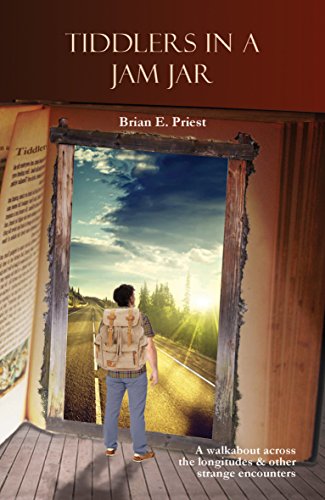
Book Review: Tiddlers in a Jam Jar


Brian E. Priest is a brilliant writer. I don’t say that very often. I think I was expecting a travelogue when I picked Tiddlers in a Jam Jar for review. This is more a ‘lifealogue,’ if one can be permitted to make up such a word. Apparently, Brian always wanted to be a gypsey with a horse and a vardo (wagon), and from his subsequent travels, it appears that he fulfilled this boyhood dream. But every adventure has to begin somewhere, and Brian’s story starts in war time Britain. One sentence stood out for me to describe the era of war time and post war Britain: “Houses were left unlocked in an era of trust.” I found that single sentence very moving (odd though that sounds), given what life is like these days as we surround ourselves with walls, electric fences, alarms, and armed response. Life, although grim and harsh post war, was very different.

Brian takes us through moments of his (to him and his friends) almost idyllic, carefree childhood which nowadays would have been considered by the politically correct arbiters of social and parenting standards to be utterly appalling, horrifically dangerous, and hazardous to any child’s health. But he survived, despite the beige school meals, and thrived, until his peregrinations took him to that far flung edge of the precipice called life. And he jumped. Into the Antipodes…to begin a new exciting adventure. There are a number of ‘vintage moments’ that will delight readers and fans of British royalty, art classes, the Beatles and John Cleese (Monty Python enthusiasts will enjoy references), with a motley crew of eccentric and memorable characters as friends, and his low-level entry into the world of publishing. From there, and after numerous hilarious adventures, Brian headed for Central America (where apparently Americans were not popular) to enjoy some dangerous encounters, some archaeology with even more dangerous encounters, North America and Canada, the mind-boggling hippie culture, and on to Europe and beyond to more adventures in a lifetime than any one person deserves!

This book is an Aladdin’s cave of treasure for the reader who enjoys writing that engages the senses as well as one’s appreciation of great writing. There is just too much worthy writing to do this book justice in a short review. The author’s humour and wit are dry and subtle. Don’t rush your reading or you might miss some deliciously sly descriptions. Each sentence is a polished visual gem, drawing the reader into the events unfolding or the situation described. I confess to going back and rereading sentences I particularly enjoyed. Brian made me laugh out loud on more than one occasion. To be honest, I think I had a laugh on every page. His style is succinct, sometimes choppy, and yet the whole flows in a lyrical way, carrying the reader smoothly along on a never-ending river of images. For me, the imagery evoked in just a few sentences is something I have hardly ever found. What makes it even more enjoyable is that the creation of the imagery is somehow effortless. I have read books where the author drowns their readers in a sea of words, trying to get the point across or create a picture. Not so here. Each sentence does its job perfectly. Nothing is extraneous.

I enjoyed the layout. Each chapter starts with an appropriate image and a brief outline of the contents. This is unusual but perfectly suits the author’s style of writing and the contents of this book. Is this a travel memoir, a life adventure, perhaps literary fiction? Maybe a bit of everything. I absolutely adored this book. I would encourage anyone who enjoys memoirs, travel adventures, and literary writing to grab a copy and sneak off to while away some time on a wholly immersive adventure. The author has enjoyed an enviously enormous amount of fun in his life. A must-read as well for anyone who remembers catching tiddlers and putting them in a jam jar…

Sunday, June 7, 2015

Book Review: Instigators of the Apocalypse


In Instigators of the Apocalypse, author Kevin Timothy O’Kane sets out to prove how those with false interpretations of the Book of Revelation influenced wars and revolutions in the history of Western civilization. A monumental work indeed by O’Kane, and it is nigh impossible to encapsulate in this short review all that he manages to cover in his book. How does one go about condensing the history of Christian eschatology and how it has played out in the political arena and subsequently the battlefield? The author takes us right back to the beginning of Christianity in order to take us forward, covering decisive moments in history such as the Crusades, the Reformation,  the conquest of the Americas, the Inquisition, and various revolutions including the American Civil War. The time span is centuries, and the litany of carnage and destruction is depressing. The history of the early Christian church is one of Roman oppression, divisive factions and sub-factions, and a large number of arguments over the literal or spiritual meanings behind much in the Bible; however, most were strongly focused on the divinity or lack thereof of Christ, and the literal or figurative meaning in the Book of Revelation. When would the end of days and the new millenium come, and who would be the Anti-Christ?

The ideal of the predicted ‘New Jerusalem’ has permeated religious belief down the centuries, even to modern times. Interestingly, the manipulation of various so-called Christian and Muslim prophecies spawned what can only be described as ‘disinformation’ that was used to serve various political purposes, and with dire consequences. This is such a turning point because the church, impatient for results, ultimately eschewed Jesus Christ’s message of peace and submission in the face of oppression, and turned to more violent means to achieve the final days. Ironically, once the subject of persecution, Christianity morphed into an excuse for the Crusades, which had bloody and tragic consequences. Subsequently, Islam, already conquering from the 7th century with jihad as its diktat, was as brutal and destructive, and conversion by the sword the order of the day. Jerusalem, what it meant and has come to symbolise historically and theologically, is a key point in this drama. One is left saddened and astonished at the madness that prevailed when both Christians and Muslims were gripped by a religious fervour that defied all sense, all morality, all true belief as would form the basis of any faith. Even more sadly, nothing has changed because the actions of ISIL in the modern day Middle East chaos seem to herald a return to those days of carnage in the guise of divine sanction. The territorial skirmishes between Palestine and Israel have focused attention once again on an age-old issue; possession of Jerusalem, I feel, more than anything else. The Palestinian denial of Israel’s right to exist and the intention to wipe out this nation also echoes the past. Current warfare between the Arab nations, based on their own religious schisms between Sunni and Shia sects and sparked by the unrest in Yemen, rings warning bells, given the extent of the various nations’ military might.

This is a complex topic, and possibly theology students would whiz through this book. However, the author masterfully achieves what he sets out to do and that is make his theory comprehensible to the lay person, or the ordinary reader interested in Christian eschatology and the role it has played in politics, both then and now. The author enlivens the facts by introducing key figures in this vast and sweeping historical landscape, some familiar, some not, and brings their own personal stories to life. His excellent and succinct writing style allows the reader to fully absorb a large number of complicated facts, but at the same time appreciate the ‘story’ behind the history. I was astounded by the far-reaching effects of charismatic leaders over the centuries, and how in many cases a single man’s opinions, beliefs and ambitions have shaped history and the political landscape today, in many cases with negative consequences.  Tragically, faith, which brings comfort, solace and strength to millions around the world, can be twisted to wreak havoc and, with today’s access to modern weaponry, threatens to plunge the world into destruction. A fictional section of the book’s final chapter sounds a warning note. There are detailed end notes for the serious biblical scholar to refer to, testimony to the amount of research put into this fascinating, well constructed, very readable and thought provoking work. Five stars.