Wednesday, August 17, 2022

Web of Echoes: A Unique Challenge by Melody Ash


Caitlin Benoit assumed the next destination would be her time, her world. Instead, the stone thrusts her further into the past and onto a different continent. Now in 1831 England, she's discovered by William, the Duke of Lancaster. By sheer luck, he's willing to allow her into his manor. While she fights to gain a footing in this new time, Caitlin discovers the stone also ripped John from Charleston. Everything she thought she knew about how the stone worked is false, and neither John nor her understand how to escape the grip of the past. As they work to uncover the mystery of the stone, an acquaintance of the duke plots an intricate scheme certain to destroy them all. She and John must solve the puzzle in an unknown amount of time or risk getting stuck—or buried—in 1831.


Web of Echoes: A Unique Challenge 

One of the most frequently asked questions is whether an author is a planner or a pantser for a project. For me, it’s a little bit of a complicated question because what I’m writing plays a huge role into how I plan. For my Vellas, it tends to (mostly) be a pantser platform for me. I have a general idea of how the story is going to end while I initially tried to outline my first Vella story, I discovered it’s mostly about what feels right for each episode and not pushing beyond that. For my books, a loose outline chapter-to-chapter had been my primary tool for planning which allowed me plenty of wiggle-room for creativity: where are these key moments supposed to be so that the arc plays out right and there are no plot bunnies on that last page. 

Enter the Web of Echoes series. Everything, and I mean everything, got turned upside down. Right out of the gate, Echoes was, by far, the largest project I had ever chosen to write – eight planned books with alternating short stories and full-length novels to push Caitlin through her journeys. Outlining seemed to be a must, but then I quickly realized I didn’t only need a chapter-by-chapter outline but also a book-by-book summary before I even started writing. By the time I got to the end of Northern Echoes, I realized I needed a timeline to keep exact dates in line and to understand how long Caitlin stayed at each location. By the end of book three of Sunken Echoes, I realized I needed not only summaries and outlines and timelines, but also character outlines as an easy reference for where they came from, what they looked like – every important detail – so if they were referred to in later books, I didn’t have to go back and read entire manuscripts (you don’t want to know how I realized this. It wasn’t pretty.). 

Now, I’m guessing you are thinking I had it all covered. I thought I did. Oh no. Nothing is ever that easy. Because in the middle of book four, I hit that good old-fashioned brick wall. Some details in the overall story had changed from the original vision (as they always do because characters are snotty enough to get a mind of their own), and I couldn’t connect the dots in my mind anymore. I found myself in a week-and-a-half-long stalemate. I was unbelievably stuck. 

Anyone who knows me knows I’m a 1000% Disney nerd, and I love the art of animation. Funny enough, it was what I knew of the process of animation that gave me an idea on how to get, well, unstuck. I went into my kids’ school room, pulled out three different colors of construction paper, a pen, and scissors and got to work. After three days, I was over the moon. The visual storyboard I had made separated the storyline into the traditional three acts defined by the color of the construction paper. Under each titles, I could see what was supposed to happen and when, along with how that played into the character arc and the overall arcing storyline. With it as a tool, I was no longer stuck, and I’ve pulled it out for reference with each additional book in the series. I LOVE it!

Any writer will tell you that every project is a new challenge, harder than the last and easier than the next. My friend says it’s how we grow as artists; I tend to think we have a innate desire to torture ourselves. Either way, Web of Echoes’ challenges ended up giving me another tool in the box for the next time a project writes me into a corner – and a fun new way to envision it.


About the Author: My first attempt at writing came at ten years old while, during a sleepover, I tried writing a ghost story. In sixth grade, I entered my school's writing contest, and in college, my writing professor allowed me to work on a novel instead of following the curriculum. But at the time, writing was only a hobby I enjoyed. I picked it up, put it down, sometimes for months or years at a time, but I didn't think of it as a career. Instead, I majored in communications with the goal of a career in journalism. After a couple of years, I changed course and entered the travel industry. Travel had always been another love, especially to Walt Disney World, and the choice seemed the perfect fit. I opened my own travel agency and grew it from the ground up until the Great Recession of 2008 rolled in, along with the blessing of my first child. After releasing romantic suspense under the pen name, RM Alexander, Caitlin Benoit started whispering in my ear and her story started forming. My passion for adventure and travel bled onto the pages as Caitlin was launched into the adventure of a lifetime. But because the story wasn't focused on romance, I knew I needed a new pen name that would be focused more on UF / Sci-Fi, and Melody Ash was born. As a complex PTSD and trauma survivor, I often write characters who often face the worse circumstances and must search for their inner strength. It is my hope readers not only connect with the characters and stories but also are encouraged, as they read the last word, that their real-world problems can be overcome. Outside my writing world, I spend my time with my husband, two children, and Pomsky (who you'll likely find posted on my social media) in Indiana. I still love to travel and am addicted to orange juice, Ghirardelli chocolate, and adventure. Visit Melody’s website at www.melodyash.com and connect with her on Facebook and Tik Tok.


Wednesday, August 10, 2022

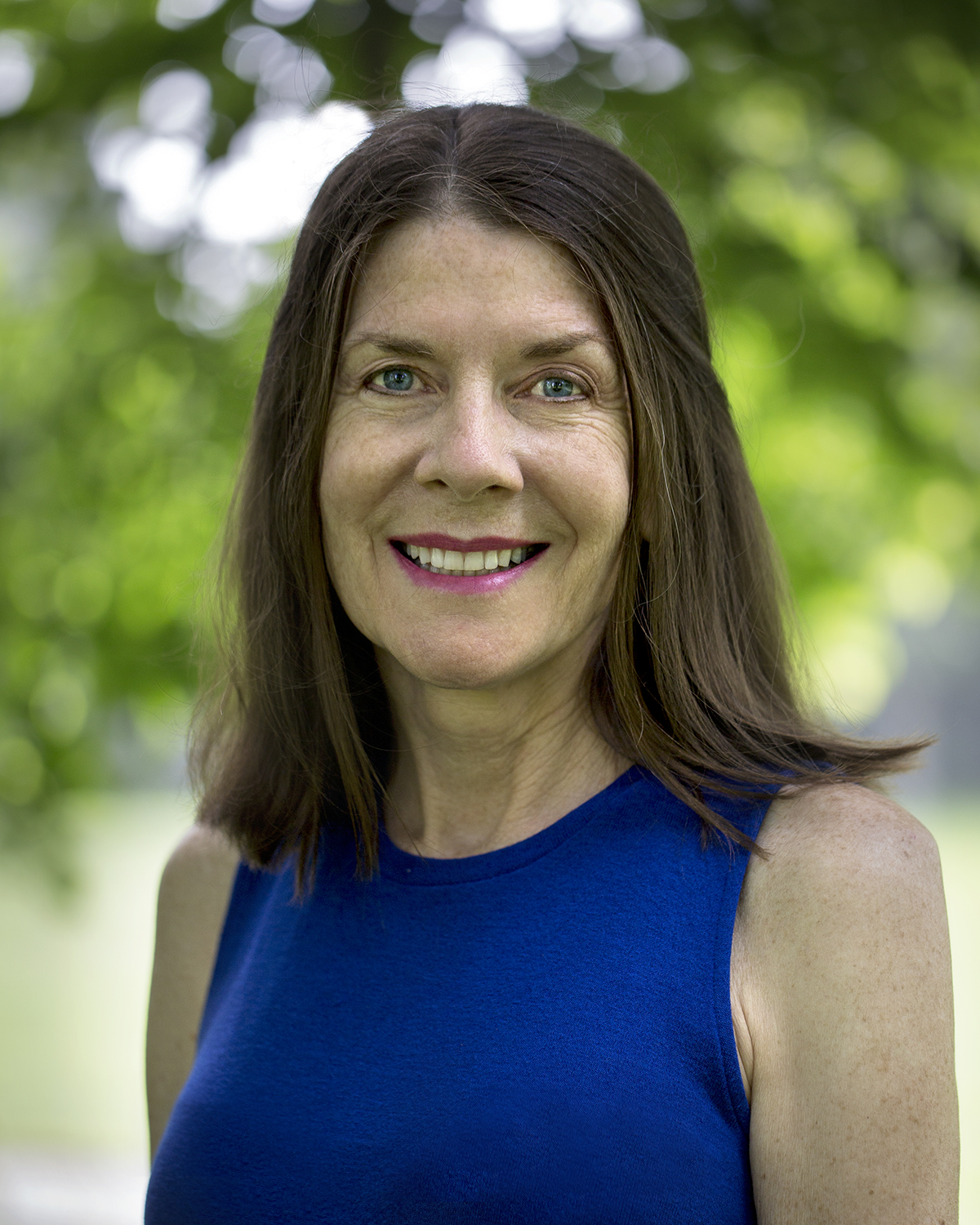
The Truth About Memoir Writing by author Carolyn DiPasquale


Fourteen-year-old Rachel guards a collection of secrets for ten years, journaling to vent her terror and loneliness. Following Rachel's fatal overdose years later, her mother, Carolyn DiPasquale, stumbles upon her daughter's diaries. Shattered, she searches for answers, retracing her steps to figure out how parents and doctors missed three major mental illnesses. What the single, working mother recalls is a far cry from what happens, as is dramatically revealed in tandem chapters gleaned from Rachel's journals. While the mother sprints from task to task, the daughter details the baffling emergence and frightening progression of bulimia, diabulimia, and borderline personality disorder; her eventual substance abuse; and heart-wrenching reasons for not seeking help. Despite her loss, DiPasquale hopes her story lights a path for victims of mental illness while awakening all readers.


The Truth About Memoir Writing

We love true stories. Books and films based on actual events are often our first picks. Maybe we’re slightly voyeuristic because we like being privy to people’s unique thoughts and experiences. Keenly aware of this, memoir writers try to serve up truth. We report events with precision. Dig deep inside to recall our exact thoughts, motives, words. And for the most part we do. But I’ve learned it’s wise to withhold some truths.  

For example, there’s a scene in “Doves Make Feeble Mothers” in which my father sharply reprimands my sister and me, respectively seven and six, for frolicking on our front lawn half naked after a bubble bath. In truth, he had led us downstairs to his dark workshop, turned on his roaring table saw, and threatened to saw off our hands if we did it again, a fact I retained in earlier versions but eventually cut. I needed an example of questionable parenting, but this was over the top; moreover, it portrayed my generally docile father as a monster for an admittedly abusive though completely isolated incident.

I also removed morsels about my ex. In earlier versions of “Broken,” I described Perry waltzing into Rachel’s hospital room on three separate occasions after her diabetes diagnosis, eating sugary foods after she begged him not to. I had included these facts to develop his character and illustrate why tension existed between him and Rachel. However, my writing group thought Perry’s behavior was too outrageous for a father to be credible. Fearing readers might question my reliability as a narrator, I cut the scene.

I was more transparent about my parenting, liberally disclosing my many mistakes. I knew some readers would criticize me. Still, these were truths worth telling; truths readers could learn from. For the same reason, I flung open my daughter’s journals, revealing things most mothers don’t want to know, much less talk about; not to be macabre, but to illustrate the tragic trajectory of untreated mental illness. I did not want readers to miss that, nor the fact that without early, effective help people will suffer and decline. Some will die. Still, I did not tell all. I withheld some truths from Rachel’s journals that would have mortified her and other dark incidents that would have crushed her father and brothers.


Carolyn DiPasquale grew up in Franksville, Wisconsin, graduating from UW-Milwaukee with a double major in English and French. In 1983, she moved to Rhode Island where she raised three children while pursuing her Master’s in English at the University of Rhode Island. Over her career, she taught literature and composition at various New England colleges; worked as a technical writer at the Naval Underseas Warfare Center in Newport; and wrote winning grants as a volunteer for Turning Around Ministries, a Newport aftercare program for ex-offenders. She has been an active member of the Newport Round Table, a professional writing group (founded in 1995), since 2013. DiPasquale currently lives in Richmond, Rhode Island where she has started working on a sequel to Reckless Grace. She has also ventured into writing children’s books. In her free time, she enjoys cooking and baking with healthy ingredients, hiking and trapshooting with her husband Phil, and volunteering at the New Hope Chapel food pantry in Carolina, Rhode Island. Visit her website to follow her updates. You can also follow her on Instagram or Facebook.

Friday, August 5, 2022

Paying Tribute with a Book: The Portuguese Immigrant: Atlantic Heritage Story


The Portuguese Immigrant: Atlantic Heritage Story
is a narrative non-fiction book about the author’s family history—particularly the lives of his paternal ancestors from Sao Miguel Island in Portugal. The story begins with his great-grandparents before shifting focus to his paternal grandparents and their unconditional love for each other. Their relationship overcame many obstacles of the time, and they were physically separated for nearly three years after leaving the homeland. They became immigrants in Canada—a place where the author was born and raised, being something that he is grateful for yet fascinated to reflect on the history of how it happened. Weaving a wonderful tale of the struggles and triumphs as well as the rich Portuguese culture of their ancestry, the book follows his grandfather, Vovô, who was the impetus for life in the New World. Embarking on the journey of lifetime, they carried out a mission guided by true love to carve out a fighting chance for the future of his family. The author speaks on various characteristics embodied and behavioural traits that have shaped his sense of self today while forging a deep connection with his ancestors. The history has been set out for those with the privilege to continue down the path—a sentiment that the author draws out with great detail. The descriptions of events set the scene to take the reader back in time.

Paying Tribute With A Book

It was a fortuitous day when I was inspired by my family history. One of those things that pulled me in like a rip current off the shores of the motherland. Meticulous research, of the genealogy kind, a hobby for the better part of ten years, compelled me to make a poetic and creative decision. I began to write a book, orchestrating my discoveries, into a biography about my grandfather's immigration to Canada. Since he came here, I have been fortunate and privileged to be born and raised on this great land. Much of what he came with has slowly disappeared with time, except for some paper documents and the memories he left behind. Today, I find myself representing a long branch of Portuguese lineage. I wanted to pay tribute and document that era of remarkable history. It would be something to reflect on, to share with readers, and most of all, commemorate what my grandfather lived for. So there I was, falling deeper down the rabbit hole as I uncovered lost details that I never knew about. With each discovery, I found a new understanding about my family, and myself. That was a long and winding road leading up to my very existence. If not for my grandfather’s trials and tribulations, the road would not have been paved as the foundation for my life today. He was an exceptional immigrant. A pioneer of the Portuguese people. He lived an incredible life while surrounded by fascinating circumstances. Weaving a wonderful tale of the struggles and triumphs as well as the rich culture of my ancestry, my book follows Vovô, who was the impetus for a new beginning. Embarking on the journey of a lifetime, he was guided by true love to carve out a fighting chance for my future. This book is his life story: The Portuguese Immigrant: Atlantic Heritage Story.

Goodreads: https://bit.ly/3IsJSSC

Amazon: https://amzn.to/3NUhMAB  


Devin Meireles
is a healthcare administrative worker from Toronto that moonlights as a freelance writer. Apart from creative writing, Devin enjoys films, history, genealogy, and stamps in his passport. He wrote a narrative nonfiction book about his grandfather’s immigration story and has published many articles in literary journals and cultural magazines. His latest book is the narrative nonfiction, The Portuguese Immigrant: Atlantic Heritage Story. You can connect with him at Instagram at www.instagram.com/lusoloonie.